HO 45' Fruehauf Z-Van Trailer (ATH16147)
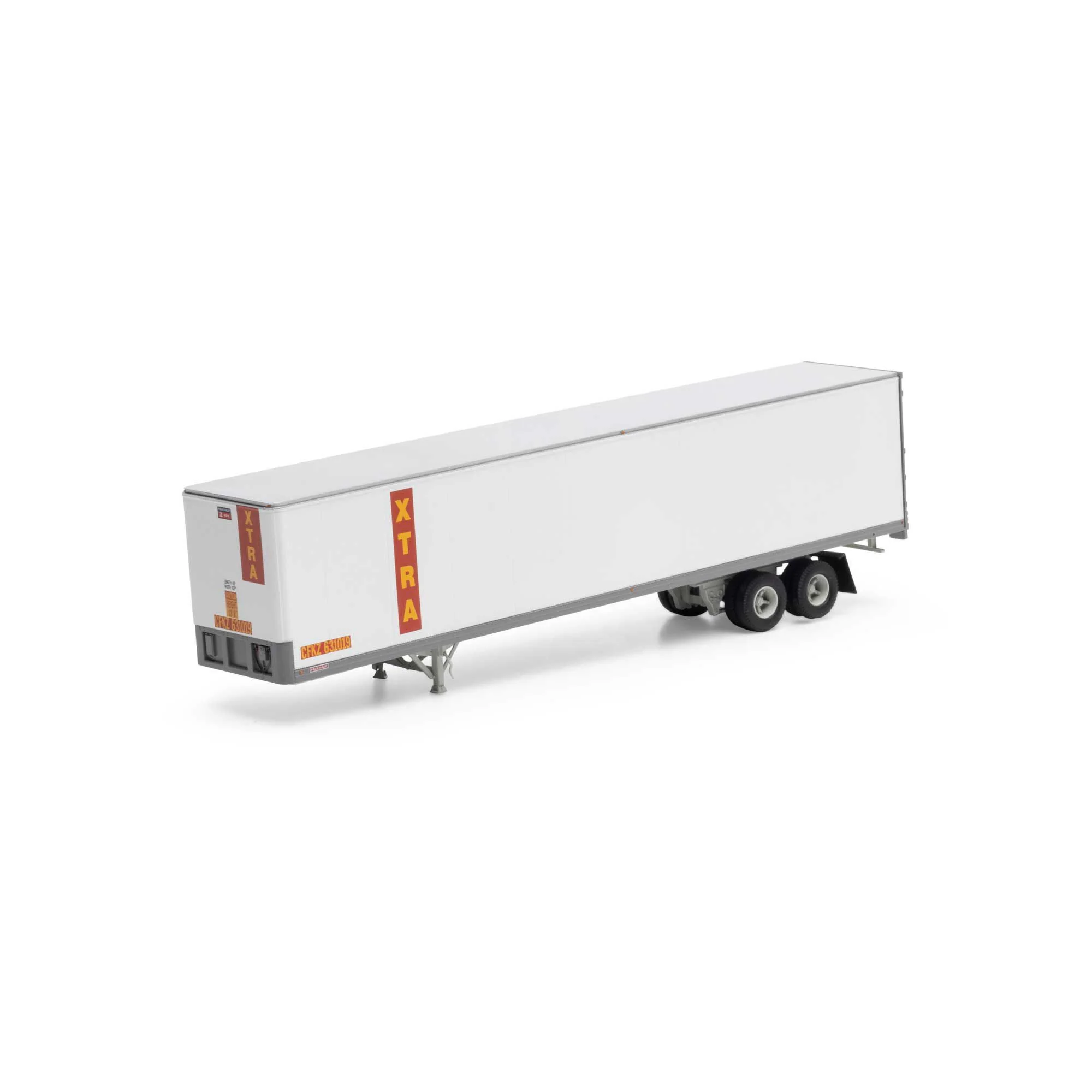
An HO-scale Fruehauf Z-Van trailer, this 45-foot intermodal model brings authentic road-and-rail appeal to HO layouts. It features a highly detailed injection-molded body, with separately applied mud flaps, rubber tires, and a painted and printed finish that mirrors the look of the prototype.
Z-Van trailers were built for intermodal service in the 1970s and 1980s, with 40- and 45-foot lengths and options such as refrigeration equipment, plus variations in landing gear and door rod configurations. The model offers three body styles—ribbed-side, beaded-side, and smooth-side—to reflect the era's design differences, making it a faithful addition to HO-scale road-and-rail scenes from the 1970s through the 2000s.
An HO-scale Fruehauf Z-Van trailer, this 45-foot intermodal model brings authentic road-and-rail appeal to HO layouts. It features a highly detailed injection-molded body, with separately applied mud flaps, rubber tires, and a painted and printed finish that mirrors the look of the prototype.
Z-Van trailers were built for intermodal service in the 1970s and 1980s, with 40- and 45-foot lengths and options such as refrigeration equipment, plus variations in landing gear and door rod configurations. The model offers three body styles—ribbed-side, beaded-side, and smooth-side—to reflect the era's design differences, making it a faithful addition to HO-scale road-and-rail scenes from the 1970s through the 2000s.
Description
An HO-scale Fruehauf Z-Van trailer, this 45-foot intermodal model brings authentic road-and-rail appeal to HO layouts. It features a highly detailed injection-molded body, with separately applied mud flaps, rubber tires, and a painted and printed finish that mirrors the look of the prototype.
Z-Van trailers were built for intermodal service in the 1970s and 1980s, with 40- and 45-foot lengths and options such as refrigeration equipment, plus variations in landing gear and door rod configurations. The model offers three body styles—ribbed-side, beaded-side, and smooth-side—to reflect the era's design differences, making it a faithful addition to HO-scale road-and-rail scenes from the 1970s through the 2000s.