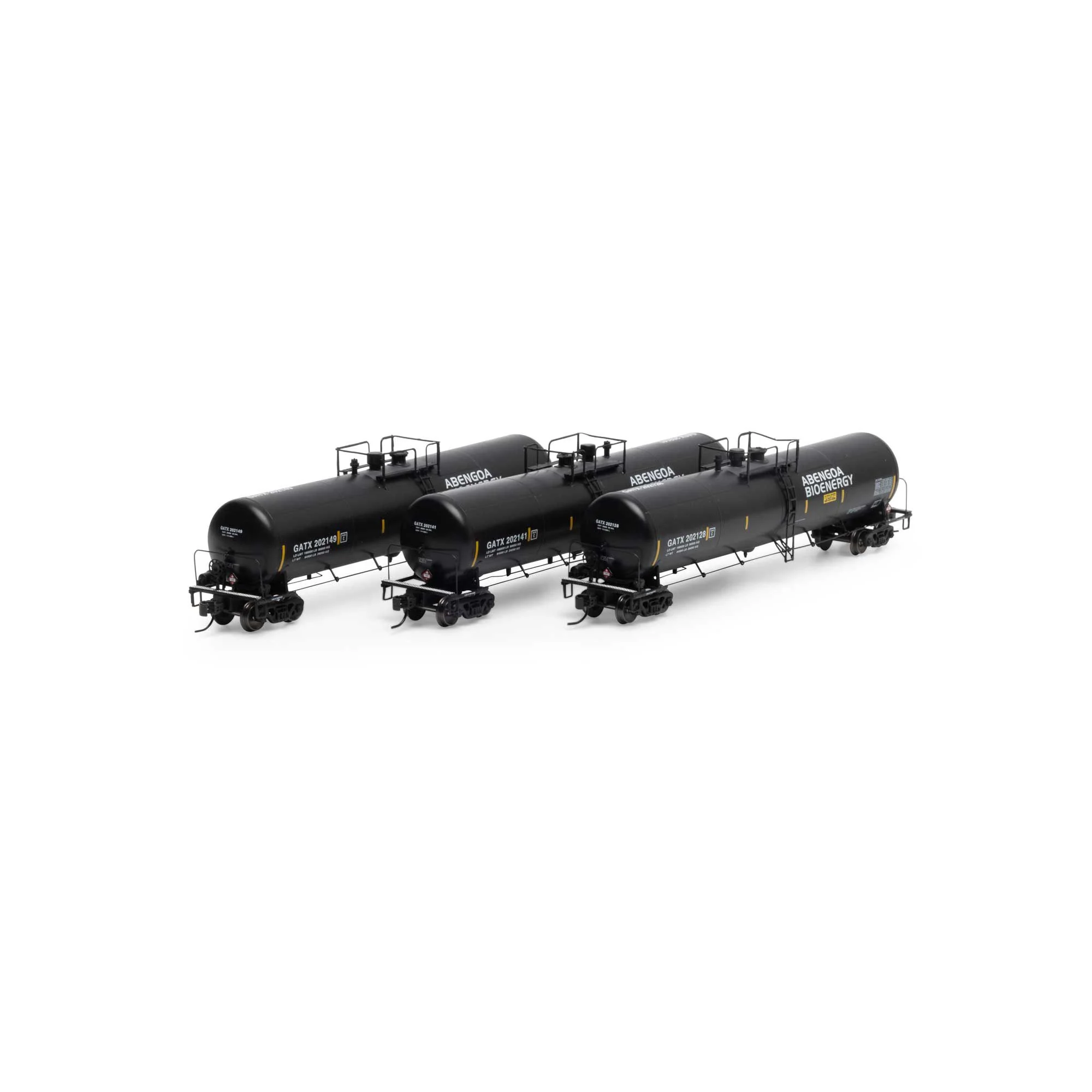
N 30,000-Gallon Ethanol Tank GATX #1 Model (ATH18025)
This N-scale 30,000-gallon Ethanol Tank Car, GATX No. 1, is a highly detailed model designed to bring authentic tanker traffic to modern freight layouts. It reproduces a contemporary ethanol tank car with features such as a separately applied brake wheel, walkway platform, manway, outlet, and ladders, along with brake rigging detail, safety rail supports and tank saddles. The model includes photo-etched metal walkways and end platforms, wire safety rails and end handrails, and printed placards, as well as screw-mounted 100-ton roller bearing trucks. Machined metal wheels run on Code 55 and Code 80 rails, and a weighted chassis helps keep the car stable in trains. Body-mounted McHenry operating scale knuckle couplers enable realistic coupling, while the injection-molded body is painted and printed for authentic decoration. The minimum curve radius is 11 inches, making it suitable for compact layouts.
Prototype background: In real life, ethanol tank cars of this capacity are typically owned by railcar leasing companies and leased to ethanol producers, often bearing corporate logos. They commonly appear in mixed train consists with other freight, serving fuel dealers, small refineries and other industrial customers, while large refineries may receive long unit trains of cars.
This N-scale 30,000-gallon Ethanol Tank Car, GATX No. 1, is a highly detailed model designed to bring authentic tanker traffic to modern freight layouts. It reproduces a contemporary ethanol tank car with features such as a separately applied brake wheel, walkway platform, manway, outlet, and ladders, along with brake rigging detail, safety rail supports and tank saddles. The model includes photo-etched metal walkways and end platforms, wire safety rails and end handrails, and printed placards, as well as screw-mounted 100-ton roller bearing trucks. Machined metal wheels run on Code 55 and Code 80 rails, and a weighted chassis helps keep the car stable in trains. Body-mounted McHenry operating scale knuckle couplers enable realistic coupling, while the injection-molded body is painted and printed for authentic decoration. The minimum curve radius is 11 inches, making it suitable for compact layouts.
Prototype background: In real life, ethanol tank cars of this capacity are typically owned by railcar leasing companies and leased to ethanol producers, often bearing corporate logos. They commonly appear in mixed train consists with other freight, serving fuel dealers, small refineries and other industrial customers, while large refineries may receive long unit trains of cars.
Description
This N-scale 30,000-gallon Ethanol Tank Car, GATX No. 1, is a highly detailed model designed to bring authentic tanker traffic to modern freight layouts. It reproduces a contemporary ethanol tank car with features such as a separately applied brake wheel, walkway platform, manway, outlet, and ladders, along with brake rigging detail, safety rail supports and tank saddles. The model includes photo-etched metal walkways and end platforms, wire safety rails and end handrails, and printed placards, as well as screw-mounted 100-ton roller bearing trucks. Machined metal wheels run on Code 55 and Code 80 rails, and a weighted chassis helps keep the car stable in trains. Body-mounted McHenry operating scale knuckle couplers enable realistic coupling, while the injection-molded body is painted and printed for authentic decoration. The minimum curve radius is 11 inches, making it suitable for compact layouts.
Prototype background: In real life, ethanol tank cars of this capacity are typically owned by railcar leasing companies and leased to ethanol producers, often bearing corporate logos. They commonly appear in mixed train consists with other freight, serving fuel dealers, small refineries and other industrial customers, while large refineries may receive long unit trains of cars.