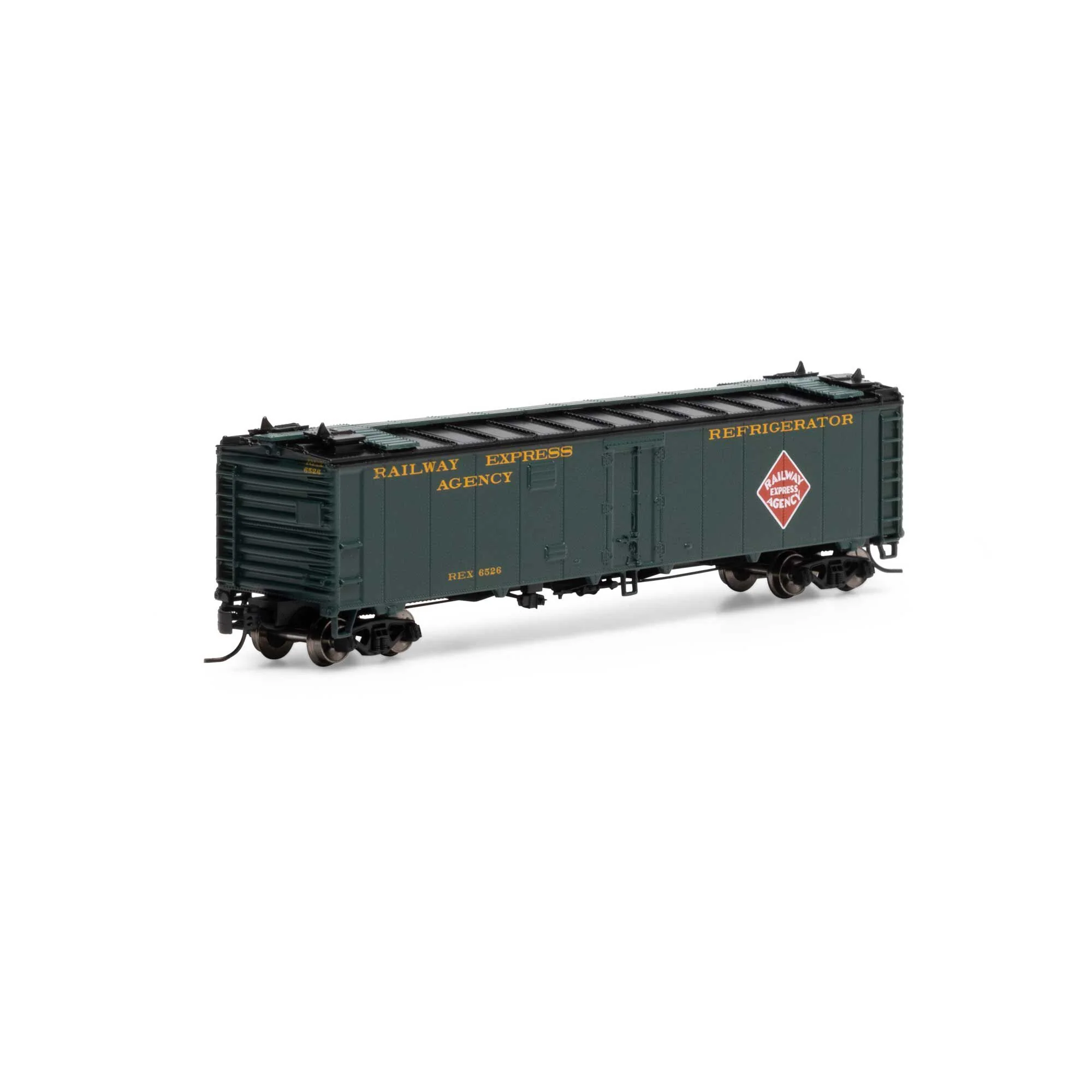
N 50' Ice Bunker Reefer REA #6526 (ATH18080)
This 50-foot ice bunker reefer model in REA markings recreates a classic refrigerated boxcar designed to move perishable freight—such as dairy, meat, and vegetables—at controlled temperatures. Ice-based cooling was a staple of mid-20th-century railroading, with the last ice bunker reefers built in 1957 and retired by 1971.
Fully assembled and ready to run, the model features screw-mounted trucks for accurate tracking, Santa Fe-style reversed ice hatches, separate brake rigging, and McHenry operating scale spring couplers. The highly detailed, injection-molded body is weighted for optimum performance, and the car can negotiate a minimum radius of 9 3/4 inches on typical layouts.
This 50-foot ice bunker reefer model in REA markings recreates a classic refrigerated boxcar designed to move perishable freight—such as dairy, meat, and vegetables—at controlled temperatures. Ice-based cooling was a staple of mid-20th-century railroading, with the last ice bunker reefers built in 1957 and retired by 1971.
Fully assembled and ready to run, the model features screw-mounted trucks for accurate tracking, Santa Fe-style reversed ice hatches, separate brake rigging, and McHenry operating scale spring couplers. The highly detailed, injection-molded body is weighted for optimum performance, and the car can negotiate a minimum radius of 9 3/4 inches on typical layouts.
Original: $40.29
-65%$40.29
$14.10Description
This 50-foot ice bunker reefer model in REA markings recreates a classic refrigerated boxcar designed to move perishable freight—such as dairy, meat, and vegetables—at controlled temperatures. Ice-based cooling was a staple of mid-20th-century railroading, with the last ice bunker reefers built in 1957 and retired by 1971.
Fully assembled and ready to run, the model features screw-mounted trucks for accurate tracking, Santa Fe-style reversed ice hatches, separate brake rigging, and McHenry operating scale spring couplers. The highly detailed, injection-molded body is weighted for optimum performance, and the car can negotiate a minimum radius of 9 3/4 inches on typical layouts.