HO Trinity 3-Bay Hopper GCCX #81072 (ATHG97163)
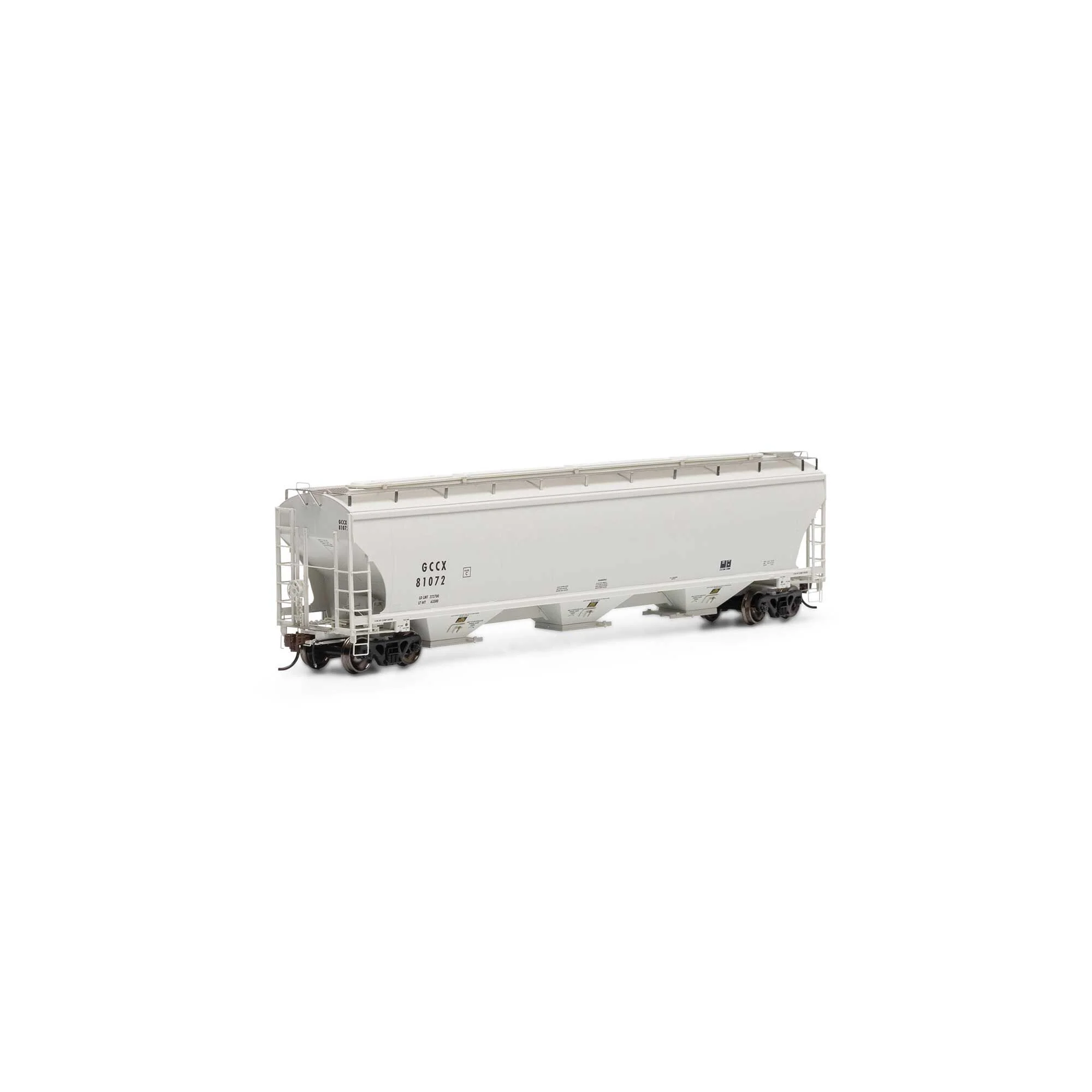
HO scale Trinity 3-Bay Covered Hopper in GCCX livery is a detailed model of Trinity Steel’s classic 3-bay hopper, designed for authentic display on HO layouts. It features two body styles—10-panel and 12-panel variations—plus end details like a coupler cut lever and air hose, a separate brake cylinder, valve and air reservoir with wired brake plumbing, and a photo-etched metal roofwalk. The model rides on Genesis 100-ton trucks with spinning roller bearing caps, uses body-mounted McHenry scale-knuckle couplers in a standard draft gear box with a screw-mounted lid, and runs on 36-inch machined metal wheels with RP25 contours for smooth operation on common track, all on a weighted chassis that handles a minimum 18-inch radius.
Primed for Grime models provide a ready starting point for weathering, delivering the look of in-service equipment with faded base colors matched to the prototype and natural grime and rust accents. In prototype terms, Trinity’s 3-bay, 5,161-cubic-foot hopper was optimized for transporting agricultural products, sugar, and other dry goods, a design that became widespread on North American railroads after multiple acquisitions in the 1980s. Today these cars are commonly seen in unit-train service across Class I and short-line networks, making this HO model a faithful, practical addition to any layout.
HO scale Trinity 3-Bay Covered Hopper in GCCX livery is a detailed model of Trinity Steel’s classic 3-bay hopper, designed for authentic display on HO layouts. It features two body styles—10-panel and 12-panel variations—plus end details like a coupler cut lever and air hose, a separate brake cylinder, valve and air reservoir with wired brake plumbing, and a photo-etched metal roofwalk. The model rides on Genesis 100-ton trucks with spinning roller bearing caps, uses body-mounted McHenry scale-knuckle couplers in a standard draft gear box with a screw-mounted lid, and runs on 36-inch machined metal wheels with RP25 contours for smooth operation on common track, all on a weighted chassis that handles a minimum 18-inch radius.
Primed for Grime models provide a ready starting point for weathering, delivering the look of in-service equipment with faded base colors matched to the prototype and natural grime and rust accents. In prototype terms, Trinity’s 3-bay, 5,161-cubic-foot hopper was optimized for transporting agricultural products, sugar, and other dry goods, a design that became widespread on North American railroads after multiple acquisitions in the 1980s. Today these cars are commonly seen in unit-train service across Class I and short-line networks, making this HO model a faithful, practical addition to any layout.
Original: $59.99
-65%$59.99
$21.00Description
HO scale Trinity 3-Bay Covered Hopper in GCCX livery is a detailed model of Trinity Steel’s classic 3-bay hopper, designed for authentic display on HO layouts. It features two body styles—10-panel and 12-panel variations—plus end details like a coupler cut lever and air hose, a separate brake cylinder, valve and air reservoir with wired brake plumbing, and a photo-etched metal roofwalk. The model rides on Genesis 100-ton trucks with spinning roller bearing caps, uses body-mounted McHenry scale-knuckle couplers in a standard draft gear box with a screw-mounted lid, and runs on 36-inch machined metal wheels with RP25 contours for smooth operation on common track, all on a weighted chassis that handles a minimum 18-inch radius.
Primed for Grime models provide a ready starting point for weathering, delivering the look of in-service equipment with faded base colors matched to the prototype and natural grime and rust accents. In prototype terms, Trinity’s 3-bay, 5,161-cubic-foot hopper was optimized for transporting agricultural products, sugar, and other dry goods, a design that became widespread on North American railroads after multiple acquisitions in the 1980s. Today these cars are commonly seen in unit-train service across Class I and short-line networks, making this HO model a faithful, practical addition to any layout.