HO Trinity 3-Bay Hopper NS #294211 Model (ATHG97168)
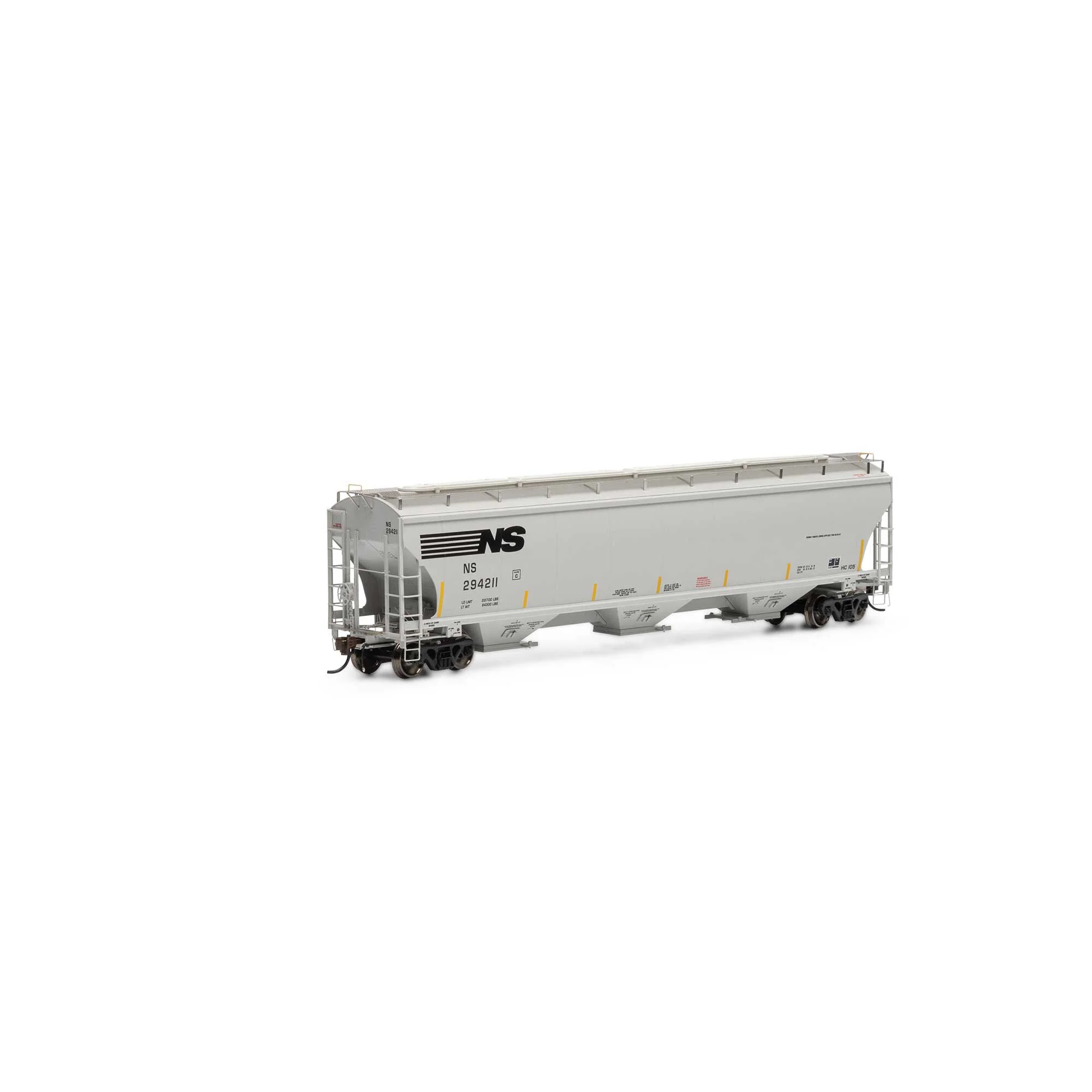
HO-scale Trinity 3-Bay Hopper NS #294211 is a detailed model of Trinity Steel’s 3-bay covered hopper, built for Norfolk Southern service on HO layouts. This car is designed to resemble in-service equipment used to transport agricultural products, sugar, and dry chemicals across North American rail networks.
Two body styles are represented (10-panel and 12-panel variations) and the model features a coupler cut lever and air hose on each end, plus a separate brake cylinder, valve and air reservoir with wire brake plumbing. A photo-etched metal roofwalk adds to the realism, while body-mounted McHenry operating scale knuckle couplers, a standard draft gear box with screw-mounted lid, Genesis 100-ton trucks with spinning roller bearing caps, and 36-inch machined metal wheels with RP25 contours ensure authentic look and reliable performance on HO track. The car is weighted for steady handling and has a minimum radius of 18 inches. It’s primed for grime, offering a faithful in-service appearance with faded base colors and an ideal starting point for weathering grime and rust. Based on Trinity’s widely used 3-bay 5161 cubic-foot hopper design, these cars were built to move agricultural products, sugar, and dry chemicals across North American railroads and remain common on Class 1 and short-line fleets today.
HO-scale Trinity 3-Bay Hopper NS #294211 is a detailed model of Trinity Steel’s 3-bay covered hopper, built for Norfolk Southern service on HO layouts. This car is designed to resemble in-service equipment used to transport agricultural products, sugar, and dry chemicals across North American rail networks.
Two body styles are represented (10-panel and 12-panel variations) and the model features a coupler cut lever and air hose on each end, plus a separate brake cylinder, valve and air reservoir with wire brake plumbing. A photo-etched metal roofwalk adds to the realism, while body-mounted McHenry operating scale knuckle couplers, a standard draft gear box with screw-mounted lid, Genesis 100-ton trucks with spinning roller bearing caps, and 36-inch machined metal wheels with RP25 contours ensure authentic look and reliable performance on HO track. The car is weighted for steady handling and has a minimum radius of 18 inches. It’s primed for grime, offering a faithful in-service appearance with faded base colors and an ideal starting point for weathering grime and rust. Based on Trinity’s widely used 3-bay 5161 cubic-foot hopper design, these cars were built to move agricultural products, sugar, and dry chemicals across North American railroads and remain common on Class 1 and short-line fleets today.
Description
HO-scale Trinity 3-Bay Hopper NS #294211 is a detailed model of Trinity Steel’s 3-bay covered hopper, built for Norfolk Southern service on HO layouts. This car is designed to resemble in-service equipment used to transport agricultural products, sugar, and dry chemicals across North American rail networks.
Two body styles are represented (10-panel and 12-panel variations) and the model features a coupler cut lever and air hose on each end, plus a separate brake cylinder, valve and air reservoir with wire brake plumbing. A photo-etched metal roofwalk adds to the realism, while body-mounted McHenry operating scale knuckle couplers, a standard draft gear box with screw-mounted lid, Genesis 100-ton trucks with spinning roller bearing caps, and 36-inch machined metal wheels with RP25 contours ensure authentic look and reliable performance on HO track. The car is weighted for steady handling and has a minimum radius of 18 inches. It’s primed for grime, offering a faithful in-service appearance with faded base colors and an ideal starting point for weathering grime and rust. Based on Trinity’s widely used 3-bay 5161 cubic-foot hopper design, these cars were built to move agricultural products, sugar, and dry chemicals across North American railroads and remain common on Class 1 and short-line fleets today.